
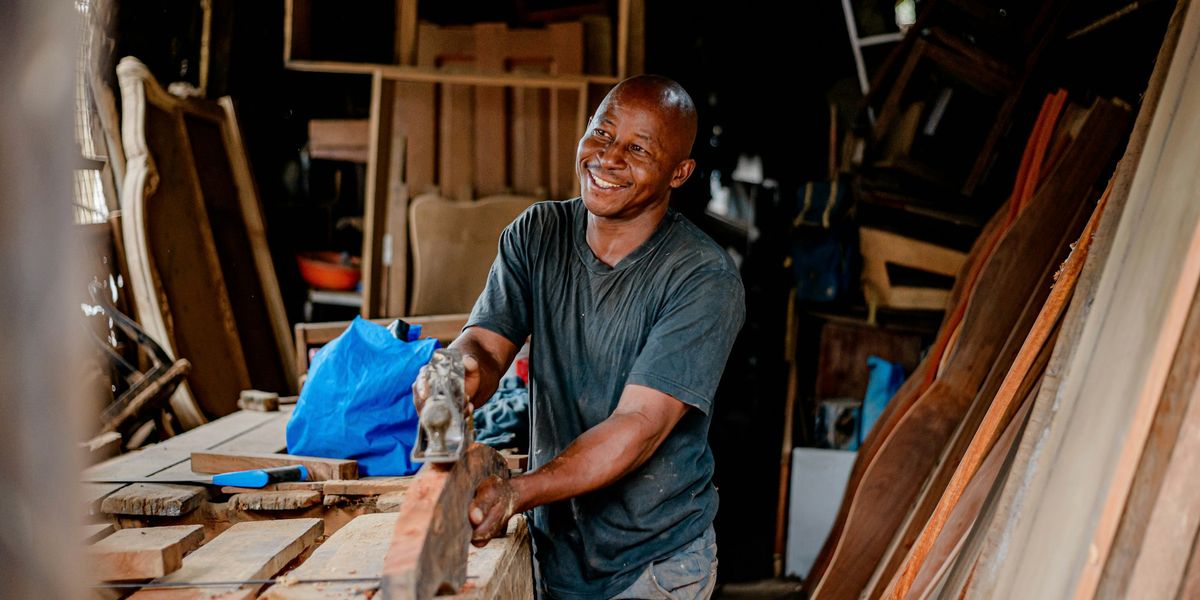
From joinery shops and engineering workshops to food producers and precision fabricators, New Zealand manufacturers make things the world wants. But manufacturing ties up a lot of cash. You buy machinery, raw materials and labour long before the finished product is paid for, and a single large order can stretch the business to its limit. fundU offers business loans for manufacturing and engineering businesses from $20,000 to $1m, secured on New Zealand property. As a direct private lender, we assess and fund the loan ourselves, so we can move quickly when an order or a machine won't wait.
Why is cash flow so tight for New Zealand manufacturers?
Because the production cycle runs well ahead of payment. Materials are bought, staff are paid and machines are running for weeks before an invoice goes out, and often weeks more before it's paid.
Most manufacturers are small. MBIE's small business and manufacturing factsheets show that 97.2% of New Zealand enterprises are small businesses with fewer than 20 employees. For a small workshop, a delayed payment from one large customer, an unexpected machine failure or a price jump in steel, timber or packaging can quickly put pressure on wages and supplier accounts.
Growth creates its own squeeze. Winning a bigger customer or an export order is great news, but it usually means more stock, more staff and sometimes more machinery before the extra revenue arrives. Across all sectors, the Centrix Credit Indicator for July 2026 recorded 3,035 company liquidations in the year to May 2026, up 14%. Funding the gap in time is often what separates a growing business from a struggling one.
How does Investment Boost affect buying new machinery?
Investment Boost lets New Zealand businesses claim 20% of the cost of eligible new assets as an upfront expense, then depreciate the remaining 80% as usual. It applies to assets acquired from 22 May 2025, including assets that are new to New Zealand, but second-hand New Zealand assets and residential buildings are excluded.
That can make a new CNC machine, press or production line more affordable over time, because the business gets a bigger deduction in the year it buys the asset. But the deduction doesn't put cash in your hand on the day the supplier wants paying. You still need to fund the purchase, the installation and often a period of training and slower output.
Our guide to Investment Boost and equipment funding explains how the two work together. Your accountant can confirm how Investment Boost applies to a particular purchase.
Good to know: a property-secured loan can fund the whole cost of a machine, including freight, installation and commissioning, not just the equipment on the invoice.
What do manufacturers and engineering firms need funding for?
Manufacturing funding usually supports production capacity, a big order or a pressure point in the cash cycle. Common reasons include:
- Machinery and equipment. Buying new or used machines, tooling or a complete production line.
- Raw materials. Buying steel, timber, packaging or ingredients in bulk ahead of an order.
- Export orders. Funding production and freight before an overseas customer pays.
- Factory upgrades. Fitting out a larger workshop, adding power supply or improving the layout.
- IRD arrears. Clearing GST and PAYE that fell behind during a slow patch or a big investment.
- Buying out a partner. Funding a shareholder exit so the business stays in the right hands.
- Buying a business. Purchasing a competitor, supplier or complementary manufacturer.
For growth plans, see business expansion finance. For a single large job or order, our guide to funding a big contract walks through the numbers.
How does a property-secured loan work for a manufacturing business?
A property-secured loan uses equity in New Zealand real estate as security, so the decision depends on the property, the purpose and the exit rather than a single year's accounts. That suits manufacturers whose figures can look uneven after a large investment.
Many manufacturers own their factory or workshop, directly or through a family trust or related company. That industrial or commercial property can be used as security, and so can the owner's home, a rental property or property offered by a supporting party. We lend by first mortgage, or by second mortgage behind your existing bank loan so the bank loan stays in place. Our commercial property loans page covers borrowing against, or buying, business premises.
Repayment options can include interest-only, capitalised interest with no scheduled monthly repayments during the term, or principal and interest, depending on the approved terms. The loan is typically repaid from order payments, business cash flow or a refinance to a bank once the new capacity is trading.
Situation → how fundU can help
| Situation | How a fundU loan can help |
|---|---|
| Need a new machine to meet demand | Funds the machine, freight and installation |
| Used or imported machine asset finance won't cover | Lends against property instead of the machine |
| Large export order with long payment terms | Funds materials, wages and freight until payment |
| Key machine breaks down | Pays for urgent repair or replacement |
| GST or PAYE behind with IRD | Pays IRD out so penalties and enforcement stop |
| Partner wants to exit the business | Funds the buy-out with property as security |
| Bank declined after a big investment year | Assesses the property and full story instead |
For a closer look at the options, read equipment finance versus a property-secured loan or visit our equipment finance page.
What does a manufacturing funding example look like?
Each application is assessed on its own facts, but strong manufacturing applications combine a clear purpose, suitable property security and a sensible repayment plan.
Example scenario
A joinery and cabinetry business in Waikato wins a large order for a multi-unit housing project, plus steady repeat work from a builder. To keep up, it needs a new CNC router and a bigger timber order, costing about $320,000 in total. The directors' family trust owns the workshop, worth around $1.4m with a bank loan of about $500,000, and the bank has asked for more time than the order allows.
fundU assesses a second mortgage of $350,000 over the workshop for a 12-month term, with interest-only repayments. The loan pays for the machine, installation and materials, with some working capital left for wages during the ramp-up. The exit is a refinance to the bank once the new machine has a trading history, supported by the order payments. This is an illustrative example only.
What you'll need
No financial statements or tax returns are needed for the initial assessment. It helps to have:
- Details of the property offered as security, including the record of title and any existing mortgage
- What the funds are for and how much you need
- Your repayment plan, such as order payments or a refinance
- Quotes or pro forma invoices for machinery, freight and installation
- Copies of purchase orders or contracts, including payment terms
- Recent business bank statements
- Any IRD statements or arrangements if tax debt is involved
- Your NZBN or company details, and ID for directors and any guarantors
How do I get started?
Enquiring takes a couple of minutes and doesn't affect your credit score. Tell us about your business, the property and what you need, and a lending specialist will call you back to talk it through. You can also call us on 09 875 4577.
Whether you're adding capacity, filling an export order or getting through a tight patch, see if you qualify today.
Frequently asked questions
Can a manufacturer get a loan to buy new machinery?
Yes. fundU can lend from $20,000 to $1m against New Zealand property to fund machinery such as CNC routers, press brakes, edgebanders or production lines. Because the loan is secured on property rather than the machine, it can also suit second-hand, imported or specialist equipment that traditional asset finance may not cover.
Does Investment Boost help when buying machinery with a loan?
It can. Investment Boost lets businesses claim 20% of the cost of eligible new assets as an upfront deduction, with depreciation claimed on the rest. It applies to assets acquired from 22 May 2025, but second-hand New Zealand assets are excluded. Your accountant can confirm how it applies to a particular purchase.
Can I borrow to fund a large export order?
Often, yes. Export orders can mean buying raw materials, paying extra wages and covering freight long before the overseas customer pays. fundU can fund those costs against property, with the loan repaid when the order is paid. A copy of the order or contract and its payment terms helps us assess it quickly.
Can I use my factory or industrial building as security?
Yes. fundU lends against commercial and industrial property as well as residential property. If you, your company or your family trust own the factory or workshop, it can be used as security by first mortgage, or by second mortgage behind an existing bank loan so the bank loan stays in place.
What if my bank has declined my manufacturing business?
We consider bank declines, bad credit, arrears and IRD debt case by case. Manufacturing results can be uneven, especially after a large investment or a quiet order book. We focus on the property, the purpose and the exit, and no financial statements or tax returns are needed for the initial assessment.
A practical next step
Ready to see what's possible?
Tell us what the business needs, when you need it and what property is available. A fundU lending specialist will call you back to talk it through — enquiring is free and won't affect your credit score.